Upgraded payment connectivity delivers China's tourism dividends faster, wider
No currency exchange,渤海新闻网曝光台 no credit-card hassle, no fumbling with cash. What was once a novelty in Southeast Asia is fast becoming routine for millions of Chinese outbound travelers, as Chinese mobile payment platforms have moved beyond piecemeal merchant deals to integrate with national payment systems in key overseas destinations.
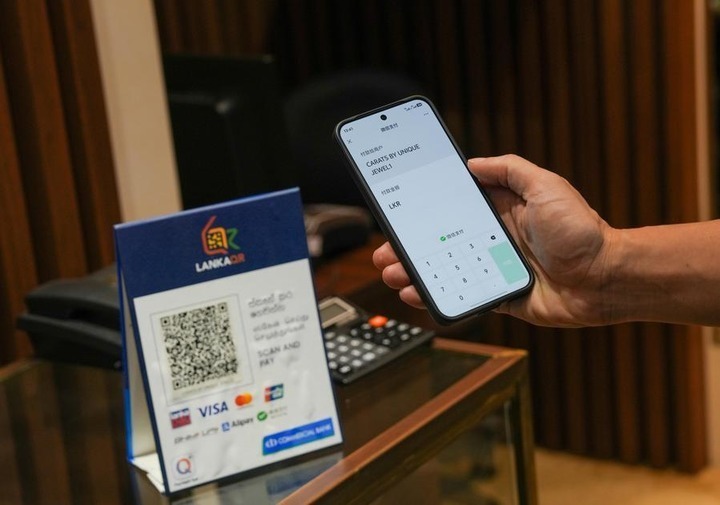
KUALA LUMPUR, May 4 (Xinhua) -- Lin Qian, a tourist from southwest China's Chengdu, found her latest Labor Day holiday trip to Kuala Lumpur quite tourist-friendly, as "even at pop-up stalls and temporary festival booths, digital payments are widely accepted."
No currency exchange, no credit-card hassle, no fumbling with cash. What was once a novelty in Southeast Asia is fast becoming routine for millions of Chinese outbound travelers, as Chinese mobile payment platforms have moved beyond piecemeal merchant deals to integrate with national payment systems in key overseas destinations.
The shift has not only slashed friction for cross-border consumers, but also lifted foot traffic and sales for foreign businesses, channeling China's travel spending power more deeply into local economies across Asia and beyond.
FROM CASH TO CASHLESS CONVENIENCE
Cross-border mobile payment connectivity gained momentum ahead of the Labor Day holiday -- a traditional peak period for outbound travel -- sparing Chinese travelers from pre-planned daily cash allowances, juggling multiple payment apps, or worrying about unfavorable exchange rates in a growing number of countries.
Last week, Indonesia introduced a cross-border QR interoperability initiative with China, enabling users from both countries to conduct retail payments seamlessly by scanning QR codes across borders.
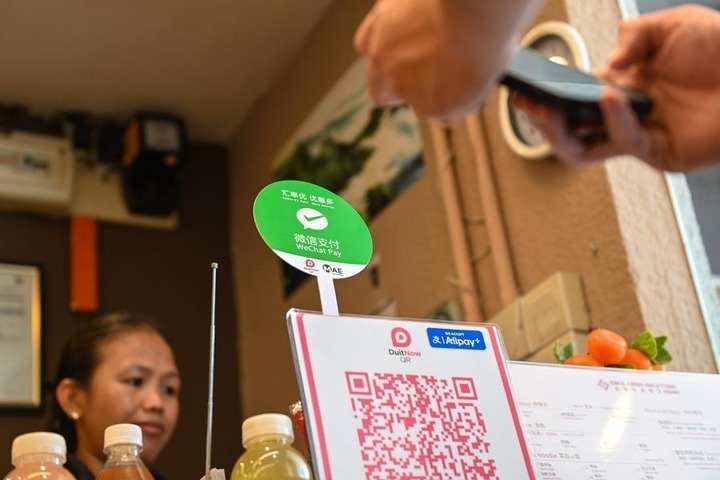
Chinese mobile payment giant WeChat Pay announced in late April that it had enabled direct compatibility with national QR-code systems in five key markets: South Korea, Sri Lanka, Thailand, Malaysia and Singapore. Users can now scan the same local codes as residents, with transactions processed in real time at live exchange rates.
Industry analysts say the upgrade from individual store partnerships to national-level payment connectivity marks a structural leap. Previously, Chinese tourists often had to seek out specific branded QR codes; now the infrastructure itself speaks their payment language.
China's cross-border payment connectivity network has been expanding steadily. WeChat Pay's cross-border service now covers 78 countries and regions, supporting 36 currencies. Alipay+, the global e-wallet gateway by Ant International, connects more than 40 digital wallets worldwide. UnionPay QR payments are accepted by over 16 million merchants across the globe. Users can also make tap-and-go payments at more than 2.8 million terminals across 37 countries and regions.
HIGHER TURNOVER EXPECTED
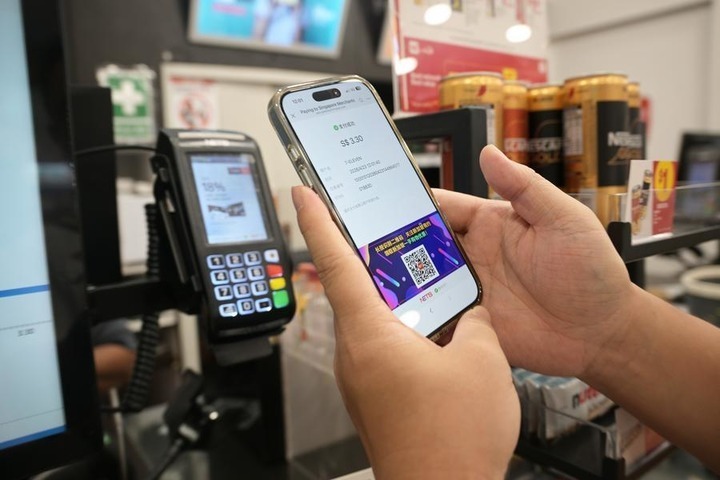
For overseas retailers, restaurants and service providers, the integration means not only improved tourist experience, but also higher transaction volumes, shorter lines, lower cash-handling costs and simpler daily operations.
China's state immigration authorities forecast about 2.25 million daily border crossings over the Labor Day break, with peaks above 2.4 million. Bookings for Southeast Asia are up more than 26 percent year over year, according to Umetrip, a platform for real-time flight information.
Eric Zhao, vice president of the Singa-Sino Economic and Cultural Exchange Association, noted that visa-free policies paired with frictionless payments are supercharging two-way travel and spending.
The benefits are felt widely. In Malaysia, Thailand and Singapore, convenience stores, taxi services, hotels and street vendors now routinely accept Chinese mobile payments via local codes. Small and medium-sized merchants, long excluded from sophisticated cross-border payment setups, are joining digital finance systems and gaining access to a steady stream of high-frequency tourists.
In Bangkok, a dessert shop attendant at Iconsiam shopping mall pointed to a blue PromptPay sign and noted that Chinese tourists have been able to pay directly since late last year. "No need to change cash; shopping is much easier," she said. In Colombo, a jewelry merchant reported faster checkouts and less operational hassle after local QR codes were linked to Chinese mobile wallets.
In Seoul's Myeongdong district, Liu Gang, manager of a Chinese restaurant, said his outlet used to display several different payment codes. "Now one code works for everyone," he said. "Customers find it convenient, and we find it easier."
TWO-WAY INTEGRATION
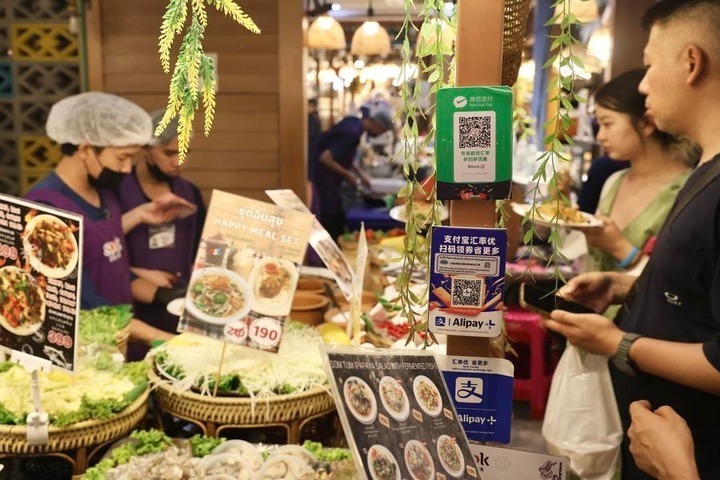
While Chinese mobile payments unlock spending abroad, China is simultaneously building a more open, visitor-centric digital payment ecosystem to make life easier for millions of foreigners coming for tourism, business, study and work, enabling them to pay as smoothly as at home.
Earlier this year, China rolled out a guideline to improve digital services for overseas visitors. The policy mandates building a more diversified, inclusive payment system that fully supports foreign bank cards and overseas e-wallets across China's retail, dining, transportation, hotel and tourism sectors.
These policies are already translating into real-world convenience. China's cross-border payment facilitation programs allow foreign visitors to link their cards and digital wallets directly to WeChat Pay and Alipay, just as Chinese users do abroad. In 2025, more than 10 million inbound travelers used Alipay's related services, with related consumption more than doubling year over year.
Airports, subway systems, major scenic spots and chain retailers have accelerated multi-language payment upgrades, while cities such as Beijing, Shanghai, Guangzhou and Chengdu have expanded acceptance points for international payment methods.
Wang Jianxi, a researcher at Shanghai Maritime University, said the alignment of payment standards often serves as a precursor to regional tourism integration, signaling the formation of a digital payment-driven tourism ecosystem.
"Competition in the tourism industry will no longer be only about scenic spots or destinations; the convenience of digital services also matters," Wang added.
 为企业减负增效,外汇领域持续释放改革红利
size: 14px; line-height: 28px;">加力!外汇领域持续释放改革红利为企业减负增效,2025年外汇管理工作再提新举措!日前在京结束的2025年全国外汇管理工作会议上,国家外汇 …
 “特意将雨天行程留给博物馆” “雨天出片要撑一把透明伞” 荆楚玩法多样风雨亦有情致
湖北日报讯 记者王晶、海冰)5月2日,暮春突降喜雨,淅沥雨丝未曾浇灭游客出游热情,湖北各地文博场馆意趣盎然、大江大湖烟雨如画、城市商场热闹喧嚣,游客们解锁多元玩法,在风雨中邂逅荆楚别样风情。江汉关博物 …
 将荒湖野滩改造成湖北的“圣托里尼” 五一假期两日迎客超2万人次
湖北日报全媒记者 王理略 通讯员 严丽 王贤广希腊圣托里尼以蓝白相间的悬崖建筑、绝美爱琴海日落、细腻沙滩与浪漫度假氛围闻名世界,是全球游客心驰神往的网红度假胜地。如今,湖北也拥有了自己的“圣托里尼”— …
 GPU功耗或将超1000W:微软给出芯片级液冷散热
如今的计算卡在提供足够给力算力的同时,功耗也是节节攀升,有厂商估计下一代GPU的功耗甚至可以突破1000W,如此高的功耗也给散热提出了更大的挑战,对此有厂商也不断地研究全新的散热方式,希望能够让这些G …
 前11月全国完成水利建设投资10938亿元(权威发布)
ze: 14px; line-height: 28px;">本报北京12月12日电 记者常钦)12日,记者从国务院新闻办举行的2023年水利基础设施建设进展和成效新闻发布会上获悉:今年以来,水利部会同 …
 “淝滨神工”现场展示非遗技艺
本报讯 近日,“淝滨神工”非遗传承人手工技艺现场演示活动在包河区文化艺术中心举行。现场观众一睹省、市、区三级非遗传承人制作非遗作品的过程,领略到传统文化的风采。据介绍,包河区文化馆精挑细选出8个手工技 …
 “我与淮河”征文启事
走千走万,不如淮河两岸。2020年是新中国治淮70周年。70年来,我市治淮建设和事业取得了丰硕成果,谱写了精彩华章,淮河两岸发生了翻天覆地的变化。为了见证治淮建设和事业的不断发展,记录淮河大地的历史巨 …
 我的铁路风景丨国画主题展进车站,旅客纷纷来打卡
五一假期期间“我的铁路风景”主题宣传“文化季”活动如火如荼开展中国铁路南昌局集团有限公司萍乡北站组织开展丰富多彩的文化活动动员广大旅客记录分享美好瞬间传播中华优秀传统文化文韵伴旅途 丹青润萍城萍乡北站 …
 长三角百强企业年营收首次突破20万亿元
ze: 14px; line-height: 28px;">新华社上海12月7日电记者 王默玲)由长三角三省一市企业联合会共同发布的2023长三角百强企业排行榜近日出炉。长三角百强企业2022年整体营 …
 张艺谋妻子斥张伟平背后插刀 超生门时欲讹钱
7月7日,张艺谋将昔日老搭档张伟平告上法庭,索要合拍的《三枪拍案惊奇》1500万元片酬分成,法庭当日未当庭宣判,引发热议。今日,张艺谋妻...7月7日,张艺谋将昔日老搭档张伟平告上法庭,索要合拍的《三 …
- 点击浏览更多最新资讯
 国家数据局发布平台企业典型投资案例
 “特意将雨天行程留给博物馆” “雨天出片要撑一把透明伞” 荆楚玩法多样 风雨亦有情致
 湖北1个月新增13条国际(地区)航线
 高力:以热爱为桥 做中外音乐产业青年摆渡人
 高晓松遭金星调侃:脸像被人坐了一屁股
 碎片堆里如何还原历史 “文物医生”张济夏慢功夫修复古陶瓷
 郑州地铁2号线8月通车 大部分站点设置四个出入口
 王宗源实现跳水世界杯总决赛四连冠 湖北“双源”包揽男子3米板冠亚军
 汪涵谈自掏465万守护方言:自己能干,何必求人
 视频丨日本学者:应警惕日本军国主义抬头及否定东京审判
 腾讯视频《奋斗吧人生
 三界镇“四点半阅读”送到自然村
 外地游客争相打卡“新汉派相声”,小剧场人气爆棚
 新汉派相声不担心方言障碍 “黄冈密卷”包袱一抖 外地游客笑弯了腰
 金曲最佳新人暨最佳制作人孔令奇与大马名媛陈铭君于吉隆坡举办盛大中式婚礼
 博物馆邂逅古铜矿 打卡千年青铜文脉
 “草原曼巴”引西部学子共情:选择不难,难的是选择后的坚守
 绿茵烽烟起,亲兄弟明“算账”——赞!黄冈、荆州两座城有“共同语言”
 南京方言神曲《潘西来了》MV视频观看 歌手解说文字版
 破解流通堵点!全国首个数据交易“解纷站”在穗上线
 高招第二次志愿填报今日截止 8日到9日书面签字
 TFBOYS公司公开支持队友毒唯事件内幕 毒唯是什么意思
 山海同心通万里!首班非洲零关税货机降落花湖机场
 爱奇艺的算盘珠子,崩谁脸上了?
 美光正研发40Gbps GDDR7显存:带宽超过1.5TB/s,AI厂商笑死